The problem
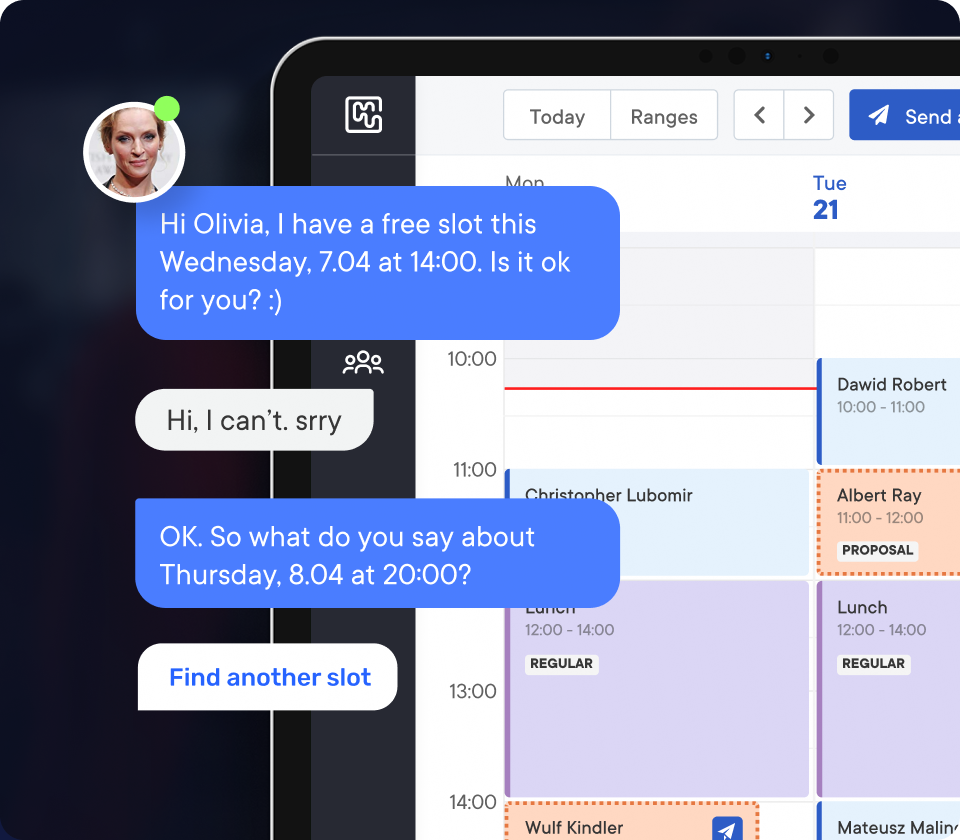
Trainers spend about two hours a week organising their calendars, and clients often move sessions. A perfect schedule quickly turns into a fragmented plan full of gaps.
Checking that the problem was real
I ran 16 interviews with trainers in two rounds and mapped the whole scheduling process. Most of them said they would use such a solution.
The first version didn't work
Tests showed trainers spent more time on setup than before. There was a performance problem too: above 30 sessions a week, every change triggered a 30–45 second recalculation.
Rebuilt around automation
Fixed slots, flexible ranges and a smart queue replaced manual decisions. When a session is cancelled, the system proposes a replacement and the trainer only accepts it. I mapped the algorithm in diagrams, which helped solve the performance issue.
In the market
- 16
- interviews with trainers
- 3rd
- place at Pitching Fight Club
- MVP
- and the first licences sold
Why we froze it
Many new smart calendar startups appeared, including AI-based ones, so after two years we froze the project. I came away with hands-on experience in marketing, sales and leading a team on a limited budget.